
Case study
Hunter Class Frigate Program (Export Controls)
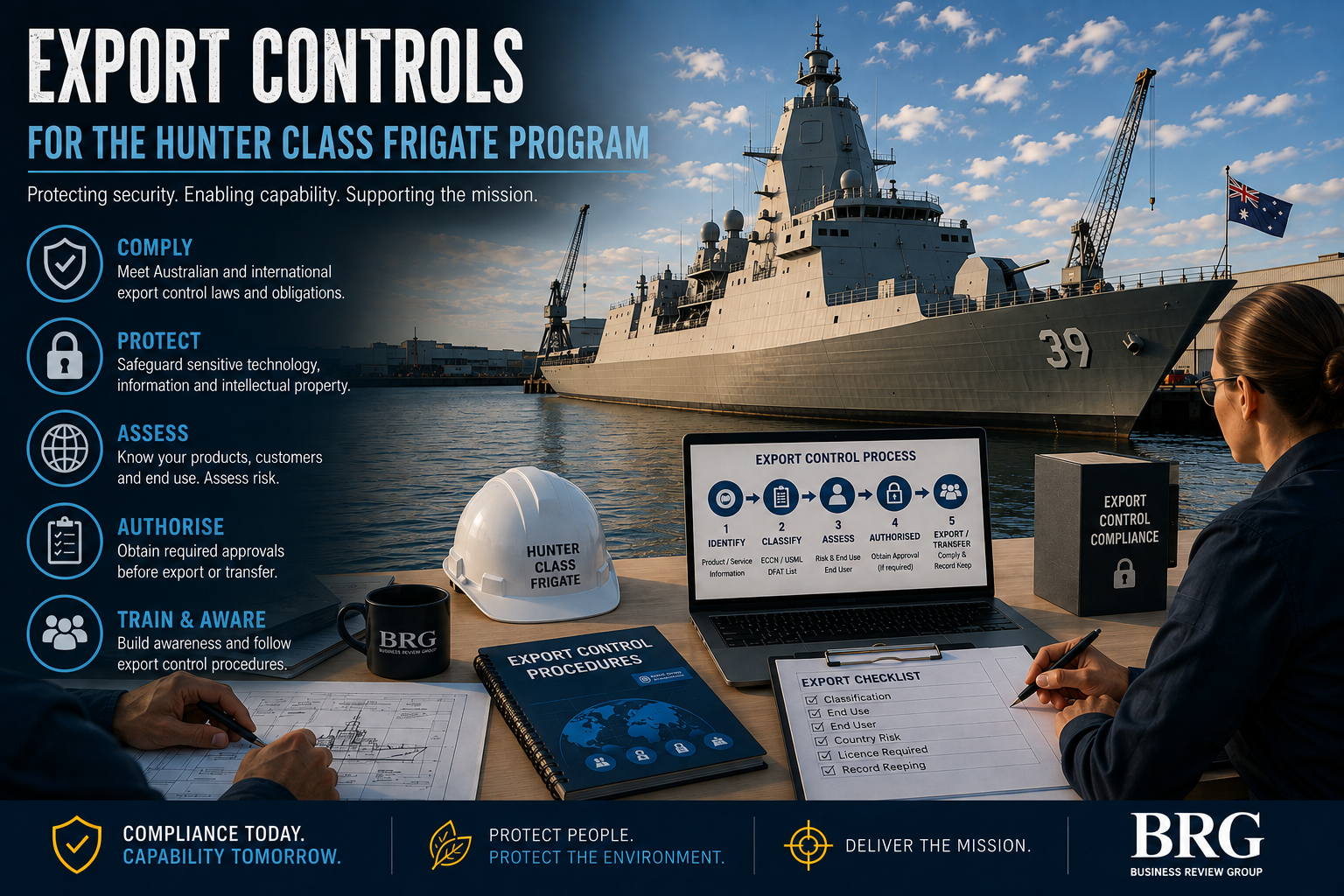
The Hunter Class Frigate Program (HCFP) requires the controlled transfer of security-protected and classified technology between Defence, Australian industry, international governments and the Program’s Prime and supply chain.
International technology transfer and export controls were creating significant administrative and schedule burden —multiple legacy licences managed in parallel, lengthy foreign government approvals, difficulty obtaining export data from System Program Offices, fragmented activity across Defence, limited specialist resources and no central licence repository.
This risked delaying transfer of critical technical information to industry while creating compliance and assurance risk against Australian and international export control obligations.
Established structured technology control, industry and international partner access, and compliance assurance against international agreements.
Engaged across Ships Division, ASC Shipbuilding/BAE Systems Maritime Australia, SEA 1000/5000, DSTG and CASG SPOs, and with UK, US, NZ and Canadian agencies.
Secured two Australian Export Blanket Licences and supported the Hunter-Hobart Harmonisation Strategy to reduce duplicate licensing.
Stood up a centralised export-control repository, process mapping and a Community of Practice.
Structured Export Controls System enabling secure, compliant transfer of sensitive technology.
Validated by Defence Export Controls and the UK Ministry of Defence in support of the Australia-UK MoU, with broader Defence application.
Programmatic licensing reduced administrative burden, freeing specialists for higher-value assurance work.
Delivered the Joint Instructions Exports, two Blanket Licences and validated Ships Division process mapping.
Senior Defence recognition, including acknowledgement from the First Assistant Secretary Ships Division and Deputy Secretary National Naval Shipbuilding